 ⭐⭐⭐⭐⭐ 4.7/5 based on 300+ reviews ✅
 Free shipping from €35 or to a pickup point
 30-day money-back guarantee

The Hedonistlabs laboratory
The question of whether alcohol stimulates the appetite is difficult to answer, largely because of the wide variety of alcoholic beverages available. Some are fizzy, others are sweet, others still are salty, some are thicker and others thinner, and each of these aspects can suppress or stimulate the appetite.
It's all about associations. For example, we associate red wine with food and so we tend to eat more when we drink it. The fizz in some alcoholic drinks can also numb your mouth and palate.
The relationship between alcohol consumption and body weight is complex and uncertain, as it can be influenced by the type of alcohol, usual drinking levels and differences between the sexes. Heavy and regular drinking is often associated with weight gain, although it's unclear whether this is due to the alcohol itself or to the extra energy intake from food.
There is evidence that alcohol can stimulate the appetite
Drinking alcohol stimulates the appetite and can make you feel hungrier. Although the mechanism isn't clear, it has been suggested that alcohol seems to bypass the satiety mechanisms that regulate short-term food intake.
Many studies have tried to test whether alcohol is actually an orexigenic substance, the medical term for any substance that increases appetite. The methods used by these researchers vary from one study to another, but their central idea is the same.
Participants were offered alcoholic or non-alcoholic drinks, and the researchers observed the calories consumed at the following meal, the hunger reported by the participants before, during and after the meal, and how satisfied and full they felt.
Alcohol can also stimulate nerve cells
Alcohol can also stimulate nerve cells in the brain's hypothalamus, which increases appetite. These neurons are activated by hunger, leading to extreme hunger, and can be stimulated by alcohol consumption, resulting in those sometimes uncontrollable cravings.
Similarly, alcohol affects the endocrine system and hormonal responses, both of which can be linked to how the brain works.
Alcohol and appetite
In short, alcohol can stimulate the appetite in some people and lead to a feeling of fullness in others. The specific choice of drink, how often you drink, whether or not you've been drinking, a lot or a little, the quality of your sleep or the quality of your food may also have played a part in the results.
It's important to note that excessive alcohol consumption can have harmful effects on your health, including an increased risk of obesity and chronic diseases such as diabetes and cardiovascular disease. That's why it's recommended to drink alcohol in moderation and maintain a balanced diet to stay in good health.
HANG-OVER and the GABA rebound
When GABA levels drop after drinking alcohol, this can also affect your appetite and feelings of hunger.
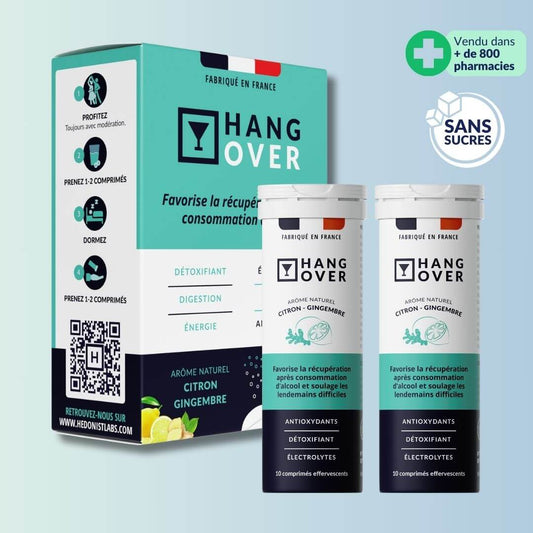
Thanks to its unique formula, which includes lemon balm, HANG-OVER helps you anticipate the GABA rebound that triggers hedonic hunger, by keeping those cravings in check, which also helps prevent weight gain.



 10 Rue de la Paix 75002 PARIS


