 ⭐⭐⭐⭐⭐ 4.7/5 based on over 300 reviews ✅
 Free shipping on orders of €35 or more, or to a package pickup location
 30-Day Money-Back Guarantee

Alcohol consumption is often seen as a way to unwind after a long day, but in reality, it can actually worsen the symptoms of anxiety and depression. Although alcohol may initially provide a sense of relaxation and calm, it is a depressant that can have negative effects on physical and mental health.
How did this happen?
Alcohol slows down brain and body function. When you drink alcohol, it enters the brain through the bloodstream, where it interacts with the neurotransmitters that control various bodily functions, including mood, cognitive abilities, and behavior.
One of the ways alcohol affects us is by increasing levels of the neurotransmitter gamma-aminobutyric acid (GABA), which can initially lead to feelings of relaxation and calm—something that seems like a good thing at first.
Over time, however, this can lead to a decrease in the brain's natural production of GABA, which can trigger and/or worsen symptoms of anxiety and depression.
Alcohol can also interfere with the absorption and processing of nutrients, such as B vitamins and folic acid, which are essential for healthy brain function. A deficiency in these nutrients can contribute to feelings of depression and other mental health issues.
It is important to note that alcohol consumption is not the only factor that can worsen symptoms of anxiety and depression.
Other factors, such as stress, poor sleep, and a lack of exercise, can also contribute to these symptoms. However, alcohol consumption can worsen these symptoms and make it harder to manage them.
What are the symptoms?
When alcohol brings us down, it can have a whole range of effects on our physical and mental health. Here are some of the most common signs of alcohol-related depression:
-Slowed reaction time: Alcohol is a depressant, which means it slows down the body’s central nervous system. This can result in slower reaction times, coordination problems, and impaired motor skills.
-Lowered Inhibitions: Alcohol can lower inhibitions, making impulsive actions or risky behavior more likely. This can have negative consequences, such as driving under the influence, unprotected sex, or violence.
-Mood Swings: Alcohol can trigger mood swings such as sadness, irritability, or aggression. This is because alcohol affects the levels of neurotransmitters in the brain, such as dopamine and serotonin, which are responsible for regulating mood.
-Memory Problems: Excessive alcohol consumption can impair memory and cognitive function, making it harder to remember events or recall information.
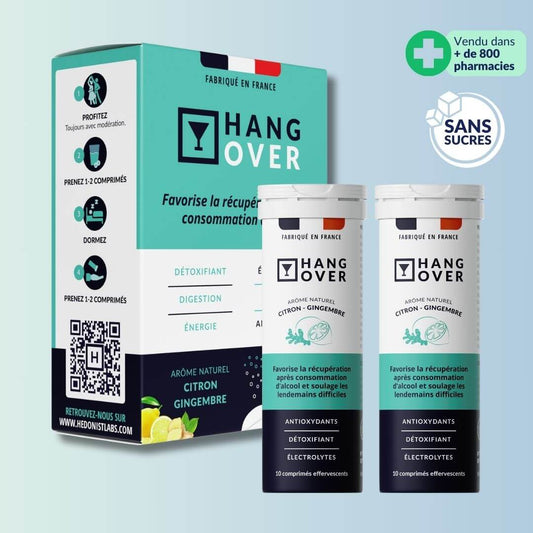
Relieve Hangover Symptoms with HANG-OVER!

Overall, the following applies: Even though alcohol may initially provide a sense of relaxation and calm, it is a depressant that can worsen the symptoms of anxiety and depression over time. People who suffer from these conditions should seek professional help and avoid alcohol and other substances that could interfere with their treatment.
Effectively prevent hangover symptoms with HANG-OVER. Thanks to the vitamin E, grape seed extract, and N-acetyl-L-cysteine in HANG-OVER, oxidative stress is significantly reduced.
Alcohol abuse is harmful to your health. Please drink in moderation.


 10 Rue de la Paix 75002 PARIS


