 ⭐⭐⭐⭐⭐ 4.7/5 based on over 300 reviews ✅
 Free shipping on orders of €35 or more, or to a package pickup location
 30-Day Money-Back Guarantee
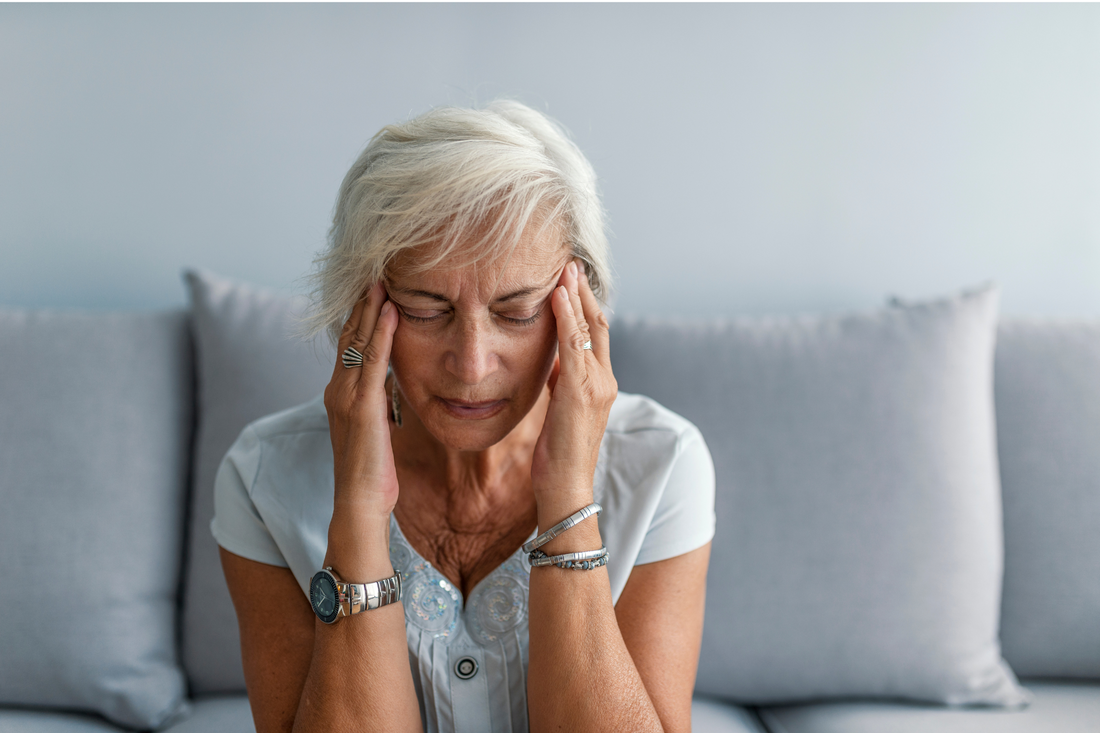
- - Fatigue
- - Back and neck pain
- - Headaches.
- - Hypersensitivity to noise and light
- - intense thirst
In addition, alcohol further depletes our body's water reserves due to its diuretic effect, which is linked to the inhibition of antidiuretic hormone secretion.
Restoring the body's water and mineral balance is crucial.
Don't wait until you're thirsty—by then it'll be too late.
Electrolytes
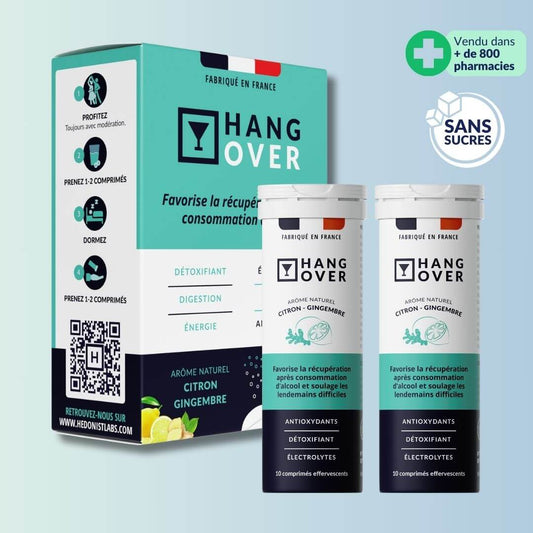
To meet the body's needs, HANG-OVER contains a suitable rehydration solution based on electrolytes (chloride, potassium, sodium).
The role of electrolytes is to counteract the dehydration of cells that occurs after alcohol consumption. The body contains a wide variety of electrolytes: sodium, potassium, calcium, bicarbonate, magnesium, chloride, and phosphate. Each electrolyte serves a specific purpose: sodium, for example, helps regulate water balance in the body, among other things.
Alcohol consumption leads to an imbalance in these electrolytes. This is because they are mobilized to eliminate the toxic byproducts of ethanol. The electrolytes that have been depleted must be replenished to restore the body’s vital fluid balance.
Acute alcohol poisoning is a common reason for admission to the emergency department. To best assess the patient’s needs, a blood test shows which electrolytes are affected. Excessive water loss is the cause of the abnormal blood test results, as our electrolytes are excreted in the urine.[2,3]
In this context, it was found that alcohol consumption magnesium levels in the blood tend to increase —which is why HANG-OVER contains no magnesium.
Oral rehydration therefore appears to be essential in the treatment of this hyperosmolar dehydration. The electrolyte concentration must comply with the recommendations for pathological dehydration. We have therefore based our formulation on the WHO’s recommendations.
Ginger
Ginger Ginger has interesting anti-inflammatory properties in the treatment of migraines triggered by veisalgia. A study shows that taking standardized ginger powder at a dose of 500–600 mg, 3 to 4 times a day every 4 hours, can relieve a migraine.[4]
Ginger's ability to restore electrolyte balance and its anti-inflammatory effects help relieve headaches.
[1]Irwin C, Leveritt M, Shum D, Desbrow B. The effects of dehydration, moderate alcohol consumption, and rehydration on cognitive functions. Alcohol. 2013 May;47(3):203-13. doi: 10.1016/j.alcohol.2012.12.016. Epub 2013 Jan 23. PMID: 23352231.
[2] Joannidis M, Cantley L (2000) Kidney and electrolyte disturbances, chap 19. In: Zernig G, Saria A, Kurz M, O'Malley SS (eds) Handbook of alcoholism. Boca Raton, Fla, CRC Press, pp 209-224.
[3] Ragland G (1990) Electrolyte abnormalities in the alcoholic patient. Emerg Med Clin North Am 8: 761-773
[4] Mustafa T, Srivastava KC. Ginger (Zingiber officinale) in migraine headache. J Ethnopharmacol. 1990;29:267-73



 10 Rue de la Paix 75002 PARIS


