 ⭐⭐⭐⭐⭐ 4,7/5 basierend auf über 300 Bewertungen ✅
 Free shipping on orders of €35 or more, or to a package pickup location
 30-Day Money-Back Guarantee
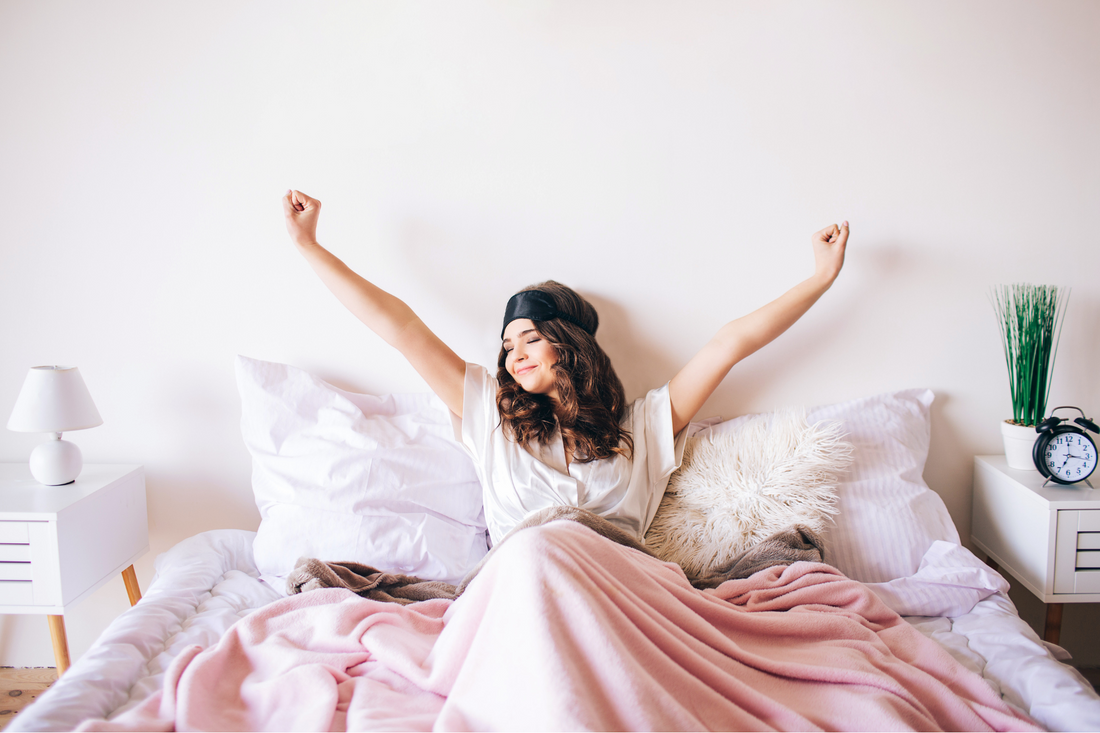
Memory and concentration problems the day after drinking alcohol are common and problematic, especially for students or people with work commitments.
Rosenwurz
Rhodiola rosea L. (R. rosea L.) is also known as Rosenwurz, Roseroot, Arctic Root, and Golden Root. [1]
In traditional Chinese medicine (TCM), R. rosea L. helps to Qi (life energy) by stimulating blood circulation, dilating blood vessels, and improving mental function. [2]
Rhodiola-Extracts are taken by athletes as dietary supplements to strengthen the body’s natural resilience, as “adaptogen” to improve physical and mental performance and to combat stress and fatigue. [3]
Several clinical studies have shown that standardized Rhodiola extract improved mental performance and attention as part of cognitive function in cases of fatigue following both a single dose and repeated doses, [4,5,6] and that it prevented physical, emotional, and mental exhaustion in patients with chronic fatigue syndrome.[7]
Its constituents include: salidroside, p-tyrosol, rosavin, pyridine, rhodiosin, and rhodionin—the active compounds of the Rhodiola genus—though their concentrations vary. [8]
Modern pharmacological studies show that the extracts can increase neurotransmitter levels, central nervous system activity, and cardiovascular function. [9,10]
Ginseng
It has been shown that ginseng consumption has positive effects on the central nervous system, particularly on cognitive function, memory, and learning ability. [11,12]. Ginsenoside Rg1 or Rb1 has been shown to be associated with improvement in cognitive performance .[13,14,15]
Ginseng offers a wide range of therapeutic properties.
L-Theanine
L-theanine receives special attention from the scientific community, which sees it as a modulator of human brain functions .
This refers to a modulation of alpha activity that occurs during tasks requiring attention, with a positive effect on mental state. [16,17,18]
The combination of goldenseal, L-theanine, and ginseng promotes concentration and helps with retention of what has been learned.
[1] (Farhath et al., 2005)
[2] (Pharmacopoeia Committee of the Ministry of Health of the People's Republic of China, 2005).
[3]. Panossian A, Wikman G, Sarris J. Rosenroot (Rhodiola rosea): traditional use, chemical composition, pharmacology and clinical efficacy. Phytomedicine. 2010
[4]. Shevtsov VA, Zholus BI, Shervarly VI, Vol'skij VB, Korovin YP, Khristich MP, Roslyakova NA, Wikman G. A randomized trial of two different doses of an SHR-5 Rhodiola rosea extract versus placebo and control of mental work capacity. Phytomedicine. 2003
[5]. Darbinyan V, Kteyan A, Panossian A, Gabrielian E, Wikman G, Wagner H. Rhodiola rosea in stress induced fatigue--a double blind cross-over study of a standardized extract SHR-5 with a repeated low-dose regimen on the mental performance of healthy physicians during night duty. Phytomedicine. 2000.
[6]. Spasov AA, Wikman GK, Mandrikov VB, Mironova IA, Neumoin VV. A double-blind, placebo-controlled pilot study of the stimulating and adaptogenic effect of Rhodiola rosea SHR-5 extract on the fatigue of students caused by stress during an examination period with a repeated low-dose regimen. Phytomedicine. 2000.
[7] Olsson EM, von Schéele B, Panossian AG. A randomised, double-blind, placebo-controlled, parallel-group study of the standardised extract shr-5 of the roots of Rhodiola rosea in the treatment of subjects with stress-related fatigue. Planta Med. 2009
[8] Zhang et al., 2006.
[9] Spasov et al., 2000
[10] Shevtsov et al., 2003
[11] Attele AS, Wu JA, Yuan CS. Ginseng pharmacology: multiple constituents and multiple actions. Biochem Pharmacol. 1999;58:1685-93.
[12] Radad K, Gille G, Moldzio R, Saito H, Rausch WD. Ginsenosides Rb1 and Rg1 effects on mesencephalic dopaminergic cells stressed with glutamate. Brain Res. 2004;1021:41-53.
[13] Benishin CG, Lee R, Wang LC, Liu HJ. Effects of ginsenoside Rb1 on central cholinergic metabolism. Pharmacology. 1991;42:223-9.
[14] Yamaguchi Y, Haruta K, Kobayashi H. Effects of ginsenosides on impaired performance induced in the rat by scopolamine in a radial-arm maze. Psychoneuroendocrinology. 1995;20:645-53.
[15] Mook-Jung I, Hong HS, Boo JH, et al. Ginsenoside Rb1 and Rg1 improve spatial learning and increase hippocampal synaptophysin level in mice. J Neurosci Res. 2001;63:509-15. [95] Gomez-Ramirez M., Kelly S.P., Montesi J.L., Foxe J.J. The effects of l-theanine on alpha-band oscillatory brain activity during a visuo-spatial attention task. Brain Topogr. 2009;22:44-51.
[16] Nobre A.C., Rao A., Owen G.N. l-theanine, a natural constituent in tea, and its effect on mental state. Asia Pac. J. Clin. Nutr. 2008;17(Suppl. 1):167-168.
[17] Gomez-Ramirez M., Higgins B.A., Rycroft J.A., Owen G.N., Mahoney J., Shpaner M., Foxe J.J. The deployment of intersensory selective attention: A high-density electrical mapping study of the effects of theanine. Clin. Neuropharmacol. 2007;30:25-38.
[18] Turkozu D., Sanlier N. l-theanine, unique amino acid of tea, and its metabolism, health effects, and safety. Crit. Rev. Food Sci. Nutr. 2017;57:1681-1687.[99] Rao T.P., Ozeki M., Juneja L.R. In search of a safe natural sleep aid. J. Am. Coll. Nutr. 2015;34:436-447.



 10 Rue de la Paix 75002 PARIS


