 ⭐⭐⭐⭐⭐ 4.7/5 based on over 300 reviews ✅
 Free shipping on orders of €35 or more, or to a package pickup location
 30-Day Money-Back Guarantee
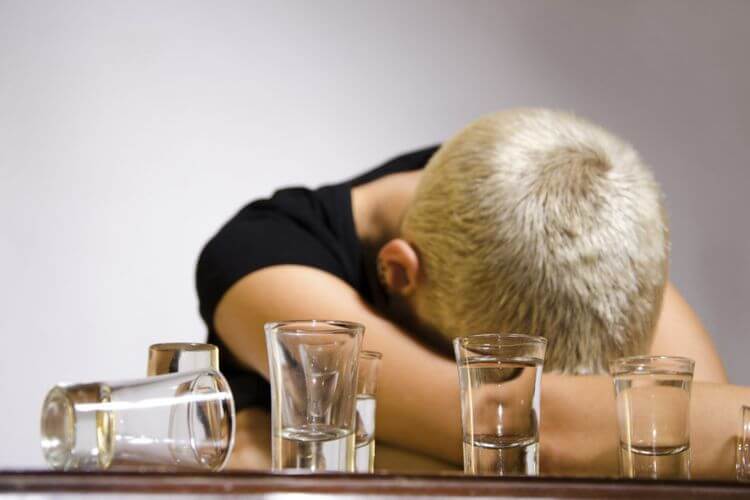
The term “binge drinking” —also known as“komasaufen”in German—refers to drinking a large amount of alcohol in a short period of time.
Originating in England, this tradition began in bars and pubs. The English tried to finish their drinks quickly so they could order more as soon as possible.
That way, they could drink as much as possible during happy hour and get drunk while spending as little money as possible.
Over time, this phenomenon spread beyond England and took hold primarily Southern and Western Europe.
As a genuine social problem, it is not limited to bars but is increasingly becoming a part of parties among friends.
In terms of quantity, binge drinking is defined as four drinks for women and five drinks for men—all consumed within two hours.
Young people are the group most affected by binge drinking. It affects 14% of 18- to 24-year-olds and 10% of 25- to 30-year-olds. Younger people as young as 16 are also believed to be affected, as are older adults.
Binge drinking causes many problems, especially for one's own health and safety, but also for the health and safety of others.
In the short term, it causes severe intoxication and can lead to alcohol coma as well as trigger risky behavior (traffic accidents, sexual assaults, physical injuries, etc.)
But even in the long term, it can increase the risk of dependence and lead to neurological consequences (impaired memory and cognitive function, etc.) as well as consequences for the digestive system (liver cirrhosis, intestinal damage) and much more.
To protect your health and your body, moderate alcohol consumption is recommended.
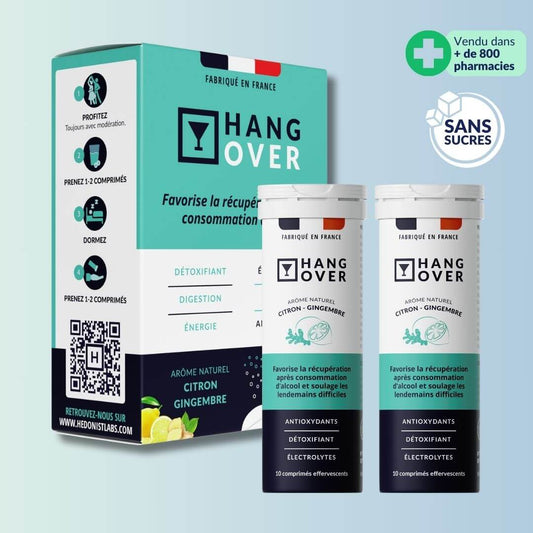
Alcohol consumption is associated with side effects. HANG-OVER is a product that helps the body reduce certain side effects. Andit remains a healthier alternative to self-medication, which can sometimes even make certain symptoms worse.
Sources:
Abrahao, K. P., et al. (2017). Alcohol and the Brain: Neuronal Molecular Targets, Synapses, and Circuits. Neuron, 96(6), 1223-1238. https://doi.org/10.1016/j.neuron.2017.10.032
Afp, S. E. A. A. (2015, April 1). FRANCE. The reality of binge drinking in figures. https://www.sciencesetavenir.fr/sante/france-la-realite-du-binge-drinking-en-chiffres_18816
What is binge-drinking? - alcoolinfoservice - Alcohol Info Service. https://jeunes.alcool-info-service.fr/alcool/binge-drinking
Grucza, R. A.,et al. (2018). Trends in Adult Alcohol Use and Binge Drinking in the Early 21st-Century United States: A Meta-Analysis of 6 National Survey Series. Alcoholism: Clinical and Experimental Research, 42(10), 1939-1950. https://doi.org/10.1111/acer.13859
Han, B. H. (2018, June 1). Prevalence and correlates of binge drinking among older adults with multimorbidity. https://pubmed.ncbi.nlm.nih.gov/29627405/
Martini, H. (2009). Binge drinking or the 'youth stunner. Après-demain, N°10,NF(2), 21. https://doi.org/10.3917/apdem.010.0021
Molina, P. E. (2018, January 1). Binge Drinking's Effects on the Body. https://www.ncbi.nlm.nih.gov/pmc/articles/PMC6104963/
Zahr, N. M., et al. (2011). Clinical and pathological features of alcohol-related brain damage. Nature Reviews Neurology, 7(5), 284-294. https://doi.org/10.1038/nrneurol.2011.42



 10 Rue de la Paix 75002 PARIS


