 ⭐⭐⭐⭐⭐ 4.7/5 based on over 300 reviews ✅
 Free shipping on orders of €35 or more, or to a package pickup location
 30-Day Money-Back Guarantee

Ending the day with a drink on the patio, having a drink to unwind, being "a little tipsy" at parties …
Alcohol consumption among college students is a long-standing tradition. However, it’s important to remember that alcohol is harmful to your health when consumed in large quantities.
Whether they’re occasional drinkers or more frequent partygoers, more than 80% of students drink alcohol. According to the 2021 USEM survey (Union nationale des mutuelles étudiantes régionales, the French association of regional student health insurance funds), 20% of students are binge drinkers, 39% of them have at some point realized they had drunk too much, and 11% of those say they drink with the intention of getting drunk.
This behavior often follows a specific initiation ritual, such as an initiation party or binge drinking. So how can we effectively prevent this among this young demographic?
"Binge Drinking": A Driver of Social Interaction?
Known in French as “Biture expresse” , binge drinking can serve as a rite of passage at the start of the academic year or take place at college parties where alcohol is involved. At such events, alcohol consumption is intended to foster social bonds by lowering inhibitions and making it easier for people to get to know one another. Among college students, alcohol is generally viewed positively because it is associated with a festive mood and enjoyment.
Some people will say that you’re happier when you drink … that alcohol helps you forget your shyness a little; that it’s easier to let loose, talk to others, and do things you wouldn’t dare do without alcohol. That’s why some students find it hard to imagine a party without alcohol …
Why is alcohol the focus of the orientation weekends (WEI)?
Alcohol is often seen as a way to break the ice in social situations. In some selective degree programs (business schools, engineering schools, medical school, etc.), these orientation weekends take place after one or more years of intensive preparation for the entrance exam.
This creates a kind of release of pressure that breaks through the limits one had set for oneself up to that point. Those who are not accustomed to drinking alcohol find themselves in a vulnerable position and may—encouraged by fellow students they don’t even know—end up drinking excessively.
Some students drink to forget their problems

Other realities, less common but unfortunately still present: For some students, alcohol is a way to cope with negative situations such as stress, loneliness, or anxiety about the future. Even though some doctors claim that one glass a day is good for your health, excessive consumption can have serious consequences for the entire body.
Whether it's for fun or to take your mind off your troubles, it's important to remember that alcohol is harmful to your health.
How can we effectively promote prevention among this young audience?
Prevention measures must help reduce risky behavior. For example, we know that peer-led prevention—carried out by other students who have already been made aware of the issue and trained—works well.
It also makes sense for the teams responsible for safety at student events to be at the center of these measures. Since they are in direct contact with young people, they must pursue a strategy of harm reduction. For example, by being present at parties and offering simple tips to limit harm: “Don’t drink too fast,” “Drink some water,” and so on.
In addition, there is a need for people who can offer alternative strategies to those who are not used to drinking or who choose not to: how to fit in at a party without drinking; how to hold a glass without it necessarily containing alcohol, and so on. Prevention efforts must have a long-term impact in order to dispel the positive image that alcohol has among students.
With this in mind, Hedonist Labs is committed to providing young alcohol consumers with the best possible support—through prevention efforts at the pharmacy counter and natural remedies to minimize the risks to their health.
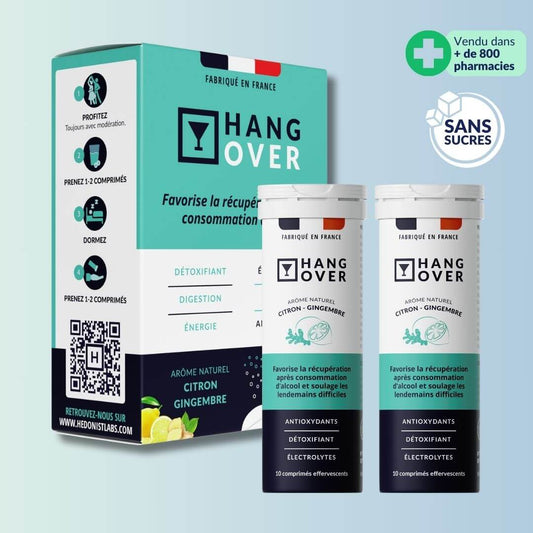
HANG-OVER dietary supplements are among the best alternatives to self-medication for relieving hangover symptoms. To avoid these consequences, the best solution is still to consume alcohol in moderation and only occasionally.
As a reminder: The recommended intake (according to the WHO) is 2 glasses per day—but not every day!
Sources:
- Chung, T. (2018). Adolescent binge drinking. Alcohol Research. Published.
- Com-Ruelle, L. (2013). Youth and Alcohol: Changes in Behavior, Risk Factors, and Protective Factors. *Question d’économie de la santé*. Published.
- Dequiré, A. F. (2013). Alcohol and Youth: A Current Overview. Journal of Youth Law. Published.
- Hwang, C. L., et al. (2020). The effects of repeated binge drinking on arterial stiffness and urinary norepinephrine levels in young adults. Journal of Hypertension, 38, 111–117.
- Morrison, C. N., et al. (2019). Exposure to alcohol outlets, alcohol access, and alcohol consumption among adolescents. Drug and Alcohol Dependence, 205, 107622.



 10 Rue de la Paix 75002 PARIS


