 ⭐⭐⭐⭐⭐ 4.7/5 based on over 300 reviews ✅
 Free shipping on orders of €35 or more, or to a package pickup location
 30-Day Money-Back Guarantee

When you think of beer, you think of a potbelly, and when you think of high-proof alcohol, you might think of sugar.
Alcoholic beverages can not only cause a hangover, but are also high-calorie drinks that can lead to metabolic disorders (weight gain, diabetes) and harm your health.
You hear it all the time—but does alcohol really make you gain weight? Let's take a look at this together!
Why Does Alcohol Make You Gain Weight?
Alcohol provides plenty of empty calories that the body doesn't need.
In addition to its harmful effects on health, alcohol also contributes to weight gain. Even though the sugar content varies from drink to drink, all wines and spirits contain at least 100 calories per glass. Here are a few examples:
- 1 glass of wine is equivalent to 100 kilocalories.
- 1 Krug Beer is equivalent to 140 kilocalories.
- 1 Whiskey Glass is equivalent to 380 kilocalories.
In addition, alcohol dehydrates the body and causes water retention.
In addition, alcohol consumption promotes the fat accumulation, especially in the abdominal area. This is because the body focuses on breaking down the calories from the alcohol and can no longer metabolize fats—which are then stored in the body.
We've all been there: an after-work drink or a slightly longer family dinner, which usually starts with an aperitif.
In terms of calories, this is the most critical moment, especially because of the sugar in the alcohol and the appetizer snacks, which are full of saturated fats.
Alcohol also stimulates the appetite. Despite the calories in the drink, we tend to wolf down large amounts of chips and all kinds of salty snacks.
Alcohol does the body no good
The ethanol in a glass of wine or beer contains a lot of calories:
7 kcal per gram of pure alcohol—nearly twice as much as sugar (4 kcal/g) and slightly less than fat (9 kcal/g). Drinking a glass of wine (10 cl, or 10 to 12 g of ethanol) is equivalent in calories to three sugar cubes. So, depending on one’s eating habits, cutting out alcohol reduces energy intake by 10 to 30 percent.
Giving it up doesn't hurt at all, because alcohol is a typical "empty" nutrient that provides the body with nothing useful —except for the hedonistic pleasure it can bring.
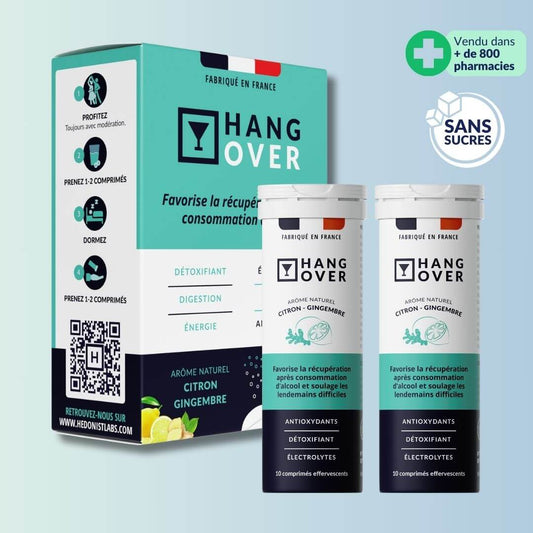
By the way, our body works quickly to get rid of it by breaking it down through a series of chemical reactions that take place mainly in the liver. This is exactly where our dietary supplement Hang-Over comes in.
Ultimately, this conversion process results, among other things, in the production of substances that promote the formation of fatty acids while simultaneously slowing down fat burning. Alcohol therefore contributes to the formation of fat deposits in two ways. The areas most affected are the abdominal fat tissue and the liver itself.
People who cut back on alcohol have better control over their diet.
Numerous studies show that alcohol stimulates the appetite, even though its calories should actually curb it. The reason: Psychological conditioning plays a major role. Opening a bottle as an aperitif automatically whets the appetite. But that’s not all—alcohol also has a physiological effect.
Alcohol affects the hypothalamus, a gland at the base of the brain, and disrupts the production of hormones that regulate appetite.
And finally, alcohol clouds our judgment. Under its influence, our inhibitions and dietary resolutions break down, giving way to hearty, overly sweet, or overly fatty dishes.
Conclusion: Know your limits!
Studies of college students clearly show that the problem is what you eat on top of your regular meals—both the snacks between meals and the long Sunday dinners.
One or two glasses a day won't make you gain weight.
If you drink a lot and are having trouble losing weight, you can try drinking less and then cutting it out completely for a week—just to see what happens. You never know …
For everyone else: Cheers!
Alcohol abuse is harmful to your health. Always drink in moderation.



 10 Rue de la Paix 75002 PARIS


