 ⭐⭐⭐⭐⭐ 4.7/5 based on over 300 reviews ✅
 Free shipping on orders of €35 or more, or to a package pickup location
 30-Day Money-Back Guarantee
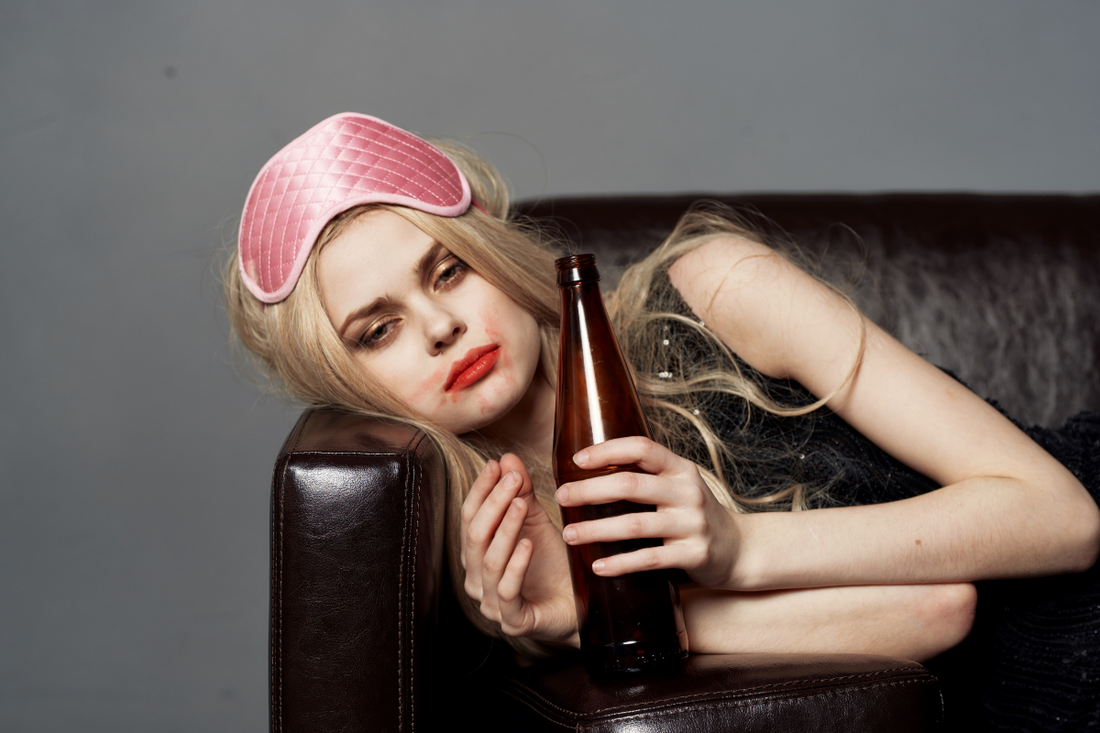
The Effects of Alcohol on Sleep and Our Solutions for Better Rest
Drowsiness, fatigue, the urge to sleep after a few drinks. Despite these sensations associated with alcohol consumption, it is common to feel tired the next day.
In fact, researchers have observed that low to moderate alcohol consumption has a sedative effect that helps people fall asleep more quickly.
During the first half of the night, alcohol prolongs light sleep and subsequently tends to reduce or even suppress REM sleep (the shortest sleep phase, characterized by intense brain activity).
Over the course of a whole night, alcohol reduces deep sleep cycles and impairs overall sleep by causing nighttime awakenings.
All of this can be explained by the fact that alcohol affects various mechanisms related to sleep.
First of all, alcohol raises body temperature.
However, in order to fall asleep, our bodies need to gradually lower their temperature. Alcohol therefore tends to prevent us from falling asleep.
In addition, alcohol has a negative effect on the release of numerous molecules, such as GABA. This is a molecule that helps the body relax, making it easier to fall asleep.
In addition, alcohol consumption can cause certain sleep disorders or exacerbate existing sleep problems.
Alcohol primarily affects snoring and sleep apnea.
Even in small amounts, alcohol affects our sleep: it reduces sleep quality, shortens sleep duration, and increases the number of times we wake up during the night.
Sleep disturbances affect our daily lives and have noticeable consequences, such as fatigue and reduced alertness, but they can also interfere with the proper functioning of our bodies (such as hormone secretion).
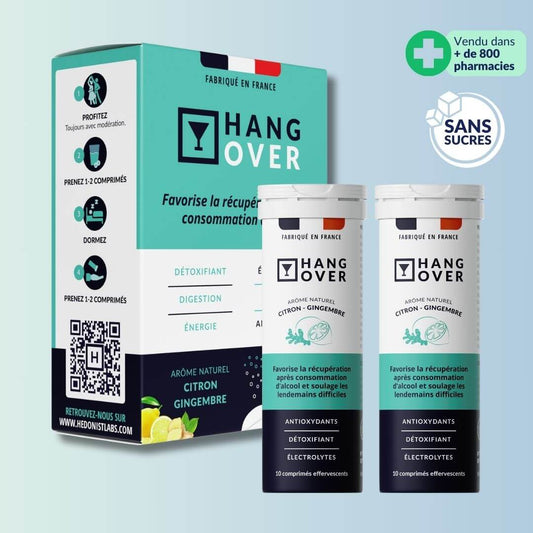
Hedonist Labs offers a dietary supplement that helps relieve symptoms associated with alcohol consumption and improves the quality of your sleep. It contains lemon balm, which is known for its calming effects and helps with sleep problems, stress, and anxiety.
For the sake of your health: Drink alcohol in moderation.
Sources:
Colrain, I. M., et al, (2014). Alcohol and the sleeping brain. Handbook of Clinical Neurology, 415‑431. https://doi.org/10.1016/b978-0-444-62619-6.00024-0
Danel, Tet al., (2001). The effect of alcohol consumption on the circadian control of human core body temperature is time dependent. American Journal of Physiology-Regulatory, Integrative and Comparative Physiology., 281(1), R52-R55. https://doi.org/10.1152/ajpregu.2001.281.1.r52
He, S., et al, (2019). Alcohol and sleep-related problems. Current Opinion in Psychology, 30117-122. https://doi.org/10.1016/j.copsyc.2019.03.007
Inkelis, S. M. (2020). Sleep and Alcohol Use in Women. Alcohol Research: Current Reviews, 40(2). https://doi.org/10.35946/arcr.v40.2.13
Issa, F. G. et al. (1982). Alcohol, snoring, and sleep apnea. Journal of Neurology, Neurosurgery & Psychiatry, 45(4), 353–359. https://doi.org/10.1136/jnnp.45.4.353
Roehrs, T. et al., (2001). Sleep, sleepiness, and alcohol use. Alcohol Res Health. Published.
Thakkar, M. et al, (2015). Alcohol disrupts sleep homeostasis. Alcohol, 49(4), 299-310. https://doi.org/10.1016/j.alcohol.2014.07.019
Van Reen, E., et al. (2011). Does the Timing of Alcohol Administration Affect Sleep? Sleep, 34(2), 195–205. https://doi.org/10.1093/sleep/34.2.195


 10 Rue de la Paix 75002 PARIS


