 ⭐⭐⭐⭐⭐ 4.7/5 based on over 300 reviews ✅
 Free shipping on orders of €35 or more, or to a package pickup location
 30-Day Money-Back Guarantee

The Dangers of Self-Medication When Treating a Hangover
In France, this phenomenon can quickly become problematic when it mixes with nights of heavy drinking.
Believing he is doing the right thing, the patient goes to the pharmacy to stock up on medication.
He tends to choose substances that can worsen his condition and are often ineffective against the symptoms of veisalgia (hangover).
A few examples:
- - Aspirin increases the concentration of alcohol in the blood
- - Paracetamol is metabolized largely by the liver, which is already hard at work breaking down alcohol. This makes it toxic.
- - Certain antihistamines (Nautamine, Nausicalm, etc.) are used to treat nausea, but they impair alertness due to their sedative effects. (1)
Good to know: More than 150 medications interact negatively with alcohol; some even trigger an Antabuse-like effect.
What is that?
The Antabuse effect is an unpleasant physical reaction caused by a buildup of acetaldehyde (a toxic byproduct of alcohol metabolism). It manifests as a clinical picture characterized by facial flushing, hot flashes, diarrhea, vomiting, etc.
But what can we do?
Alcohol consumption leads to dehydration. That is why it is very important to drink enough water.
Good to know: Coffee isn't just acidic—it can also make your body even more dehydrated. So it's better to wake up with a cup of black tea—it has just as much caffeine.
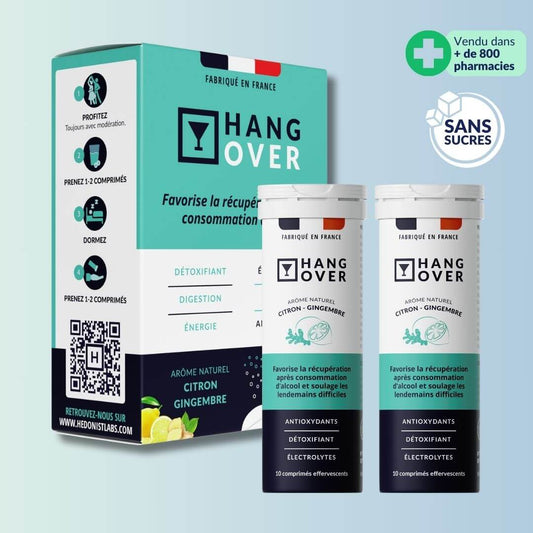
You can also help your body cope with this problem using an innovative product: Hang-Over by Hedonist Labs. It effectively helps you rehydrate, detoxify, and regenerate your body.
(1) Médicaments sans ordonnance - Les bons et les mauvais, Editions de La Martinière (2011). 571 p.



 10 Rue de la Paix 75002 PARIS


