 ⭐⭐⭐⭐⭐ 4.7/5 based on over 300 reviews ✅
 Free shipping on orders of €35 or more, or to a package pickup location
 30-Day Money-Back Guarantee
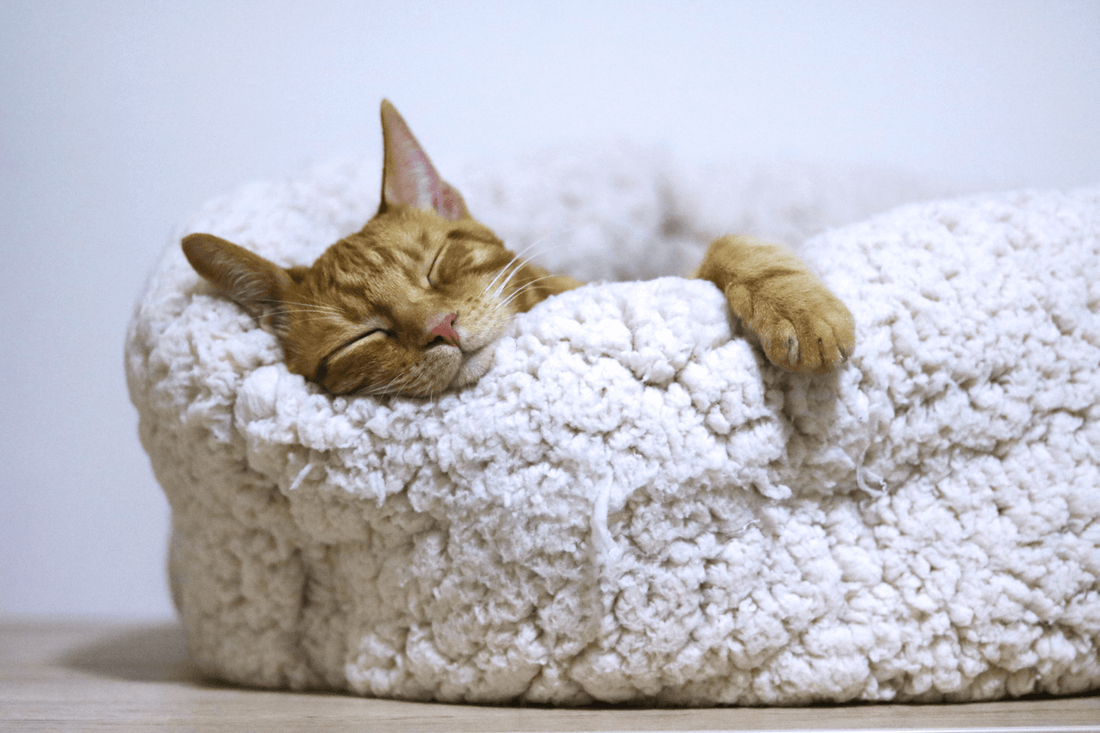
Optimize Your Sleep: Tips and Tricks for Restful Sleep
No matter who you are or how old you are: We all need sleep—it’s a physiological need. Sleep is a mysterious mechanism that is vital to our bodies and our health.
Here are a few tips to help you get a better night's sleep:
Go to bed at regular times
Our bodies follow a specific 24-hour rhythm known as the circadian rhythm. Thanks to this rhythm, certain molecules are released at specific times, including, for example, melatonin, also known as the sleep hormone.
If you go to bed at regular times, your body can adjust its rhythm to those times and thus prepare for sleep by releasing melatonin at the right time. This makes it easier to fall asleep.
The Temperature
When we fall asleep, our body temperature drops. To make it easier to fall asleep and improve sleep quality, it’s important to help your body regulate its temperature. For example, it’s recommended to sleep in a room with a temperature of about 19–20 °C.
It also helps to drink a warm, decaffeinated beverage (herbal tea, etc.) to lower your body temperature and make it easier to fall asleep.
Blue Light
The circadian rhythm also adapts to light conditions. The more light there is, the less melatonin is produced, and vice versa: the darker it is, the more is released. The circadian rhythm is particularly sensitive to blue light.
The more one is exposed to it, the more the body's rhythm becomes disrupted. Significant exposure to blue light therefore suppresses melatonin secretion. Since screens in particular emit blue light, it is recommended to avoid screens as much as possible in the hour before bedtime.
Nutrition
A balanced diet also plays an important role in getting a good night's sleep.
In fact, it has been observed that eating a carbohydrate-rich dinner a few hours before bedtime increases the plasma concentration of tryptophan. Tryptophan is an amino acid that enables the synthesis of serotonin, which in turn promotes the release of melatonin.
Similarly, a meal containing unsaturated fatty acids can improve sleep quality, while a meal high in saturated fatty acids, on the other hand, can worsen sleep quality.
Proteins, in turn, provide the body with tryptophan.
However, meat should generally be avoided before bedtime, as it is high in saturated fats. A high protein intake before bedtime can also lead to competition among amino acids and interfere with melatonin release.
It is also not recommended to eat spicy food in the evening, as this can reduce the quality of sleep.
Herbal Tea
Many plants are known for their effects on sleep. Herbal teas can therefore help you fall asleep. Here are a few examples of plants that promote sleep:
- Passionflower
- Valerian
- Lemon Balm
- Hawthorn
Bibliography:
Baek, Y., Kim, H., Mun, S., & Lee, S. (2018). Three-Component Herbal Tea Alleviates Prolonged Fatigue and Improves Sleep Quality: A Randomized Controlled Pilot Study. EXPLORE, 14(6), 420-423. https://doi.org/10.1016/j.explore.2018.05.001
Doherty, Madigan, Warrington, & Ellis (2019). Sleep and Nutrition Interactions: Implications for Athletes. Nutrients, 11(4), 822. https://doi.org/10.3390/nu11040822
Edwards, S. J., Montgomery, I. M., Colquhoun, E. Q., Jordan, J. E., & Clark, M. G. (1992). Spicy meal disturbs sleep: an effect of thermoregulation? International Journal of Psychophysiology, 13(2), 97-100. https://doi.org/10.1016/0167-8760(92)90048-g
Kechribari, I. et al. (2020). Associations between red meat intake and sleep parameters in patients with obstructive sleep apnea. Journal of the Academy of Nutrition and Dietetics, 1042-1053. https://doi.org/10.1016/j.jand.2019.10.016
Ngan, A., & Conduit, R. (2011). A Double-blind, Placebo-controlled Investigation of the Effects of Passiflora incarnata (Passionflower) Herbal Tea on Subjective Sleep Quality. Phytotherapy Research, 25(8), 1153-1159. https://doi.org/10.1002/ptr.3400
Wahl, S., Engelhardt, M., Schaupp, P., Lappe, C., & Ivanov, I. V. (2019). The inner clock-Blue light sets the human rhythm. Journal of Biophotonics, 12(12). https://doi.org/10.1002/jbio.201900102
Zhao, M., Tuo, H., Wang, S., & Zhao, L. (2020). The Effects of Dietary Nutrition on Sleep and Sleep Disorders. Mediators of Inflammation, 2020, 1-7. https://doi.org/10.1155/2020/3142874




 10 Rue de la Paix 75002 PARIS


