 ⭐ Average rating 4.65/5 from 235 published customer reviews
 Free shipping from €35 or to a pickup point
 14-day money-back guarantee
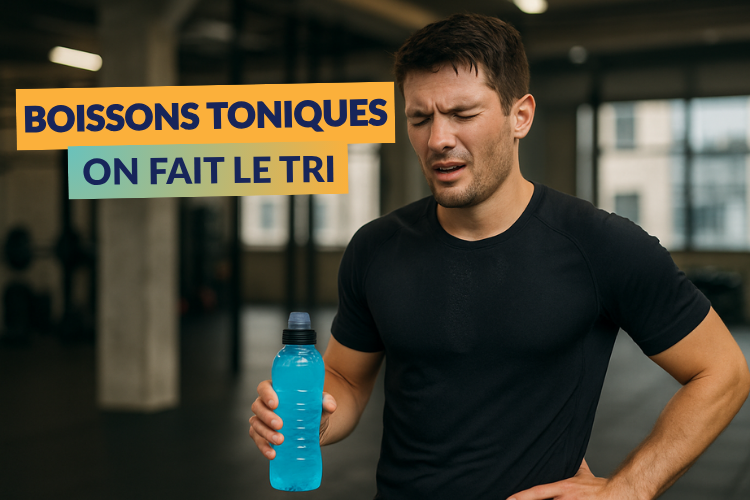
You want to do things right. You go to the gym, you warm up, you drink something in a fluorescent colour… and you still have no idea what’s actually in it.
Isotonic? Hypotonic? Hypertonic? Let us explain.
Osmolarity? It’s the concentration of particles in your drink
Picture a drink with fewer elements than your plasma = hypotonic
A drink with roughly the same concentration as your plasma = isotonic
A drink with too many elements in it (often sugar) = hypertonic
And guess what happens when you drink a hypertonic drink? → The water in your body moves into your stomach instead of the other way round. So: bloating, sluggishness, dehydration.
“A hypertonic drink slows gastric emptying and can increase the risk of gastrointestinal problems during exercise.” Gisolfi CV et al., Sports Science Exchange, 1990
The problem? 90% of “sports” drinks are hypertonic
Why? Because they contain:
-
A lot of sugar (up to 10%)
-
Artificial flavours, synthetic colourings, acids, preservatives…
-
Poorly balanced electrolytes (often not enough sodium)
“Most energy drinks available on the market are hypertonic and unsuitable for rapid hydration.” Jeukendrup AE, Journal of Sports Sciences, 2000
Quick comparison
| Type of drink | Osmolarity | Absorption | Notes |
| Plain water | Hypotonic | Average | No sodium = fast elimination |
| Soda / energy drink | Hypertonic | Slow | Low retention, digestive risk |
| Sugary sports drink | Hypertonic | Slow | Too much sugar, not enough salt |
In the middle of activity, your body doesn’t want to wait. It wants:
-
A drink that hydrates fast
-
A drink that doesn’t churn your stomach
A drink that doesn’t send your blood sugar up to 180
In short:
-
Hypertonic drink = too sugary = inefficient + heavy
-
Hypotonic drink = absorbed faster than a sugary drink
You don’t need sugar to hydrate.


