 ⭐ Average rating 4.65/5 from 235 published customer reviews
 Free shipping from €35 or to a pickup point
 14-day money-back guarantee
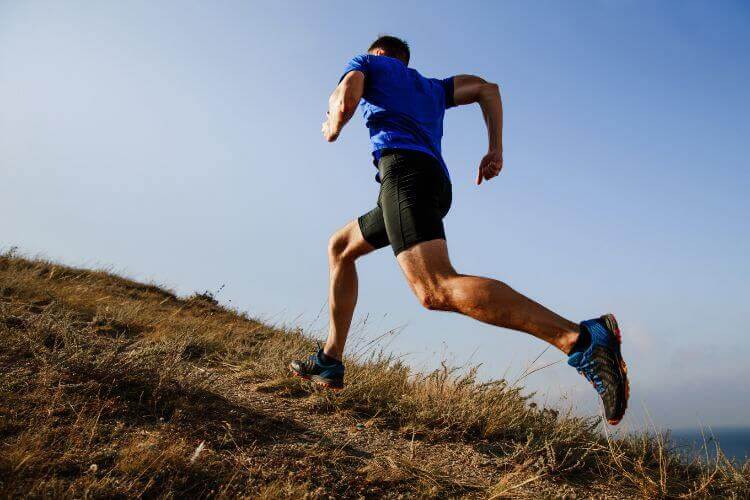
5 recipes for athletes
Physical effort leads to an increase in the body’s needs.
You need to adapt your diet so you can recover and have the energy you need to make these efforts.
For example, proteins help repair the muscle micro-tears caused by physical effort.
Then there are fats, which enable the secretion of hormones essential to recovery, and are a useful source of energy for endurance sports.
Finally, carbohydrates are used to fill the glycogen stores in the muscles. These stores give the muscles quick and easy access to carbohydrates, so they have the energy they need to produce the desired movement.
Here are a few examples of great recipes for athletes:
Pancakes:

Ingredients for 3 to 4 pancakes:
- ½ banana
- 80 g rolled oats
- 1 whole egg
- 60 ml milk
- 1 sachet of vanilla sugar
Method:
- Peel the banana
- Put all the ingredients in a bowl
- Blend everything together
- Cook the mixture in a pre-oiled frying pan (with olive oil, for example)
- Flip halfway through cooking
Nutritional values:
|
Serving |
Protein |
Carbohydrates |
Of which sugars |
Fat |
Of which saturates |
Fibre |
Calories |
|
1 pancake |
5.4 |
17.28 |
5.21 |
3.10 |
0.76 |
2.46 |
118 |
|
100 g |
8.06 |
25.79 |
7.78 |
4.62 |
1.17 |
3.68 |
177 |
|
Total |
21.61 |
69.11 |
20.85 |
12.39 |
3.12 |
9.85 |
474.37 |
These pancakes work both for breakfast and as a snack.
Their protein content makes them a good option for building muscle mass.
What’s more, these pancakes make a good post-workout snack. The whey proteins in the milk are quickly absorbed and let you start repairing your muscles straight away. And the carbohydrates quickly replenish the muscles’ stores.
Porridge:

Ingredients:
- 35 g rolled oats
- 100 g fromage blanc
- 75 ml milk
- 1 banana
- 5 g almonds
- 65 g raspberries
Method:
- Mash the banana with a fork
- Mix the oats, fromage blanc, milk and banana
- Leave to rest so the oats absorb the milk
- Top with the almonds and raspberries
|
Protein |
Carbohydrates |
Of which sugars |
Fat |
Of which saturates |
Fibre |
Calories |
|
|
Total |
17.58 |
57.46 |
31.24 |
11.46 |
4.29 |
10.3 |
403 |
Porridge is an excellent breakfast. It’s rich in protein and carbohydrates and contains good fats, which gives the body energy to keep going all morning. It’s also high in fibre and helps digestion.
Energy balls:

Ingredients for 15 balls:
- 140 g pitted dates
- 50 g almonds
- 50 g cashew nuts
- 1 tablespoon coconut oil
- 1 teaspoon chia seeds
Method:
- Chop the dates into pieces
- Blend the almonds and cashews
- Add the dates, coconut oil and chia seeds
- Blend again
- Shape into balls
- Leave to rest for 1 hour in the fridge
|
Protein |
Carbohydrates |
Of which sugars |
Fat |
Of which saturates |
Fibre |
Calories |
|
|
1 ball |
1.67 |
7.09 |
6.40 |
4.44 |
1.27 |
1.49 |
75 |
|
100 g |
9.64 |
40.91 |
36.92 |
25.61 |
7.33 |
8.61 |
433 |
|
15 balls |
25.06 |
106.37 |
96 |
66.59 |
19.05 |
22.39 |
1125 |
Energy balls are rich in carbohydrates and give the body the energy it needs for exercise. Eaten before a workout, they’ll give you the energy you need to train.
Fruit jellies:

Ingredients:
- 250 g fruit
- 250 g sugar
- 1½ sachets of gelling agent (about 60 g)
- Peel and blend the fruit
- Mix the blended fruit, sugar and gelling agent
- Heat the mixture over a low heat
- Once the sugar has dissolved, bring to the boil for 5 minutes
- Pour into a dish
- Leave to set in the fridge
- Cut into strips of the desired size
|
Protein |
Carbohydrates |
Of which sugars |
Fat |
Of which saturates |
Fibre |
Calories |
|
|
30 g |
0.1 |
16.9 |
16.8 |
< 0.05 |
< 0.05 |
0.30 |
68 |
|
100 g |
0.35 |
56.16 |
55.4 |
< 0.05 |
< 0.05 |
0.99 |
227 |
|
Total |
1.99 |
314.5 |
310 |
< 0.05 |
< 0.05 |
5.52 |
1273 |
Fruit jellies are an easy-to-digest snack that quickly provides carbohydrates, and therefore energy. They’re recommended for long training sessions, competition days (between efforts) or endurance events (marathon, trail running, etc.).
The BEAG:
A BEAG, or Boisson d’Effort d’Apport Glucidique (carbohydrate sports drink), is a drink to be consumed during training. Its purpose is to top up your carbohydrates to give your muscles energy again, but also to replace the nutrients lost through sweat. It’s recommended for sports activities lasting more than an hour and in hot weather.
A BEAG should contain between 25 and 80 g of carbohydrates per litre.
To achieve this, we recommend a mix of 1/5 fruit juice and ⅘ water.
For a one-litre drink, you could use, for example:
- 200 ml grape juice (at 16 g of carbohydrates per 100 ml, i.e. 32 g)
- 800 ml water
In hot weather, it can also be worth adding 1 g of salt per 1 L of water to replace the sodium lost through sweat, which improves hydration and helps prevent hyponatraemia.


